PV Panel Faults: Detecting Hotspots, PID, String and Diode Issues
Operations & Maintenanceeyerod · · 2 min read
Production differences in a solar plant do not point to one single failure mode. Hotspots, PID patterns, bypass diode behaviour, open circuits and string-level issues can be associated with different thermal signatures. A thermal anomaly is a finding; confirming its root cause is a separate technical step. A sound maintenance workflow records and locates the finding first, then uses the appropriate electrical test, EL image, site check and operating data where further investigation is needed.
Thermal patterns need context
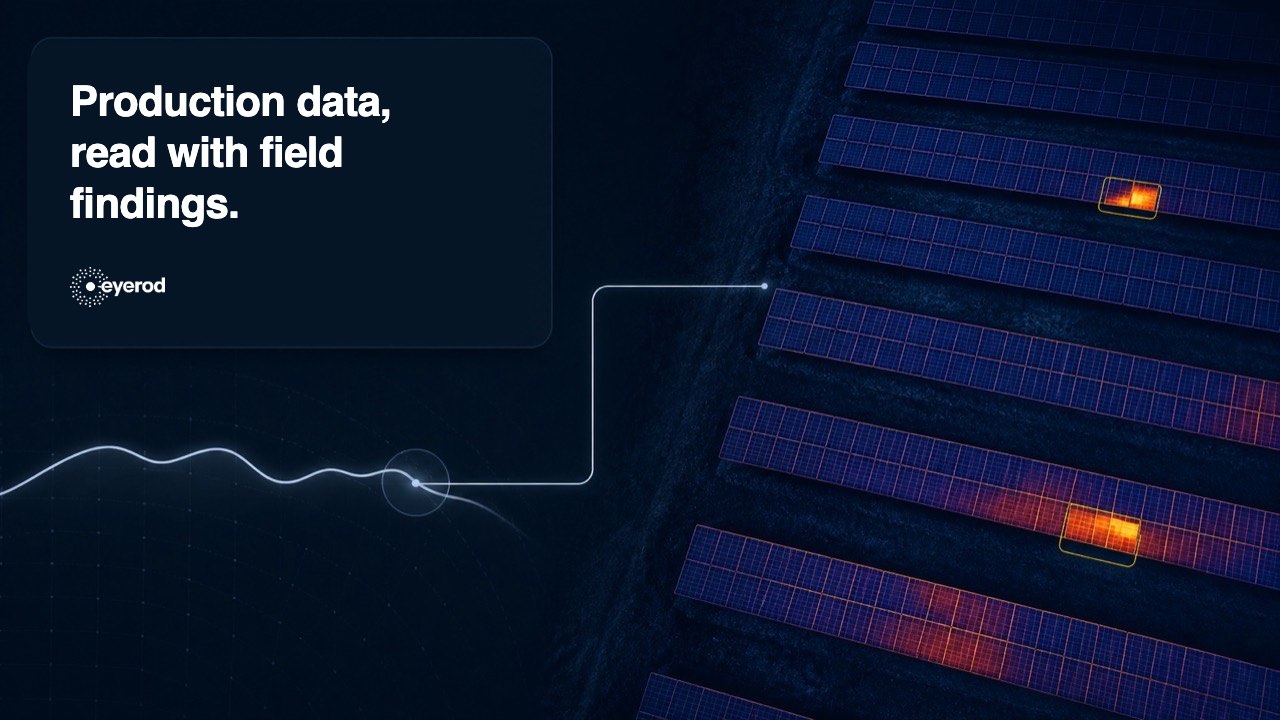
A hotspot is an area of a module that appears warmer than its surroundings. Local shading, soiling, cell damage, connection issues and other electrical conditions may be associated with this pattern. It should therefore not be described as a final root-cause diagnosis.
PID is a broad term for potential-induced degradation. Some thermal patterns can be compatible with PID, but not every temperature difference indicates PID. Module technology, system voltage, environmental conditions and electrical architecture must be considered. Likewise, string-level issues and bypass diode-related findings operate at different scales and require the string map, electrical layout and operating data as context.
From finding to maintenance action
An effective workflow distinguishes five steps: record thermal and RGB imagery; link the finding to a module, string or equipment location; document the pattern and capture conditions; review operating data, electrical records or further tests; and update the record after cleaning, repair or replacement. This avoids treating automated classification as final diagnosis and gives maintenance teams a clear next action.
eyerod Asset Intelligence
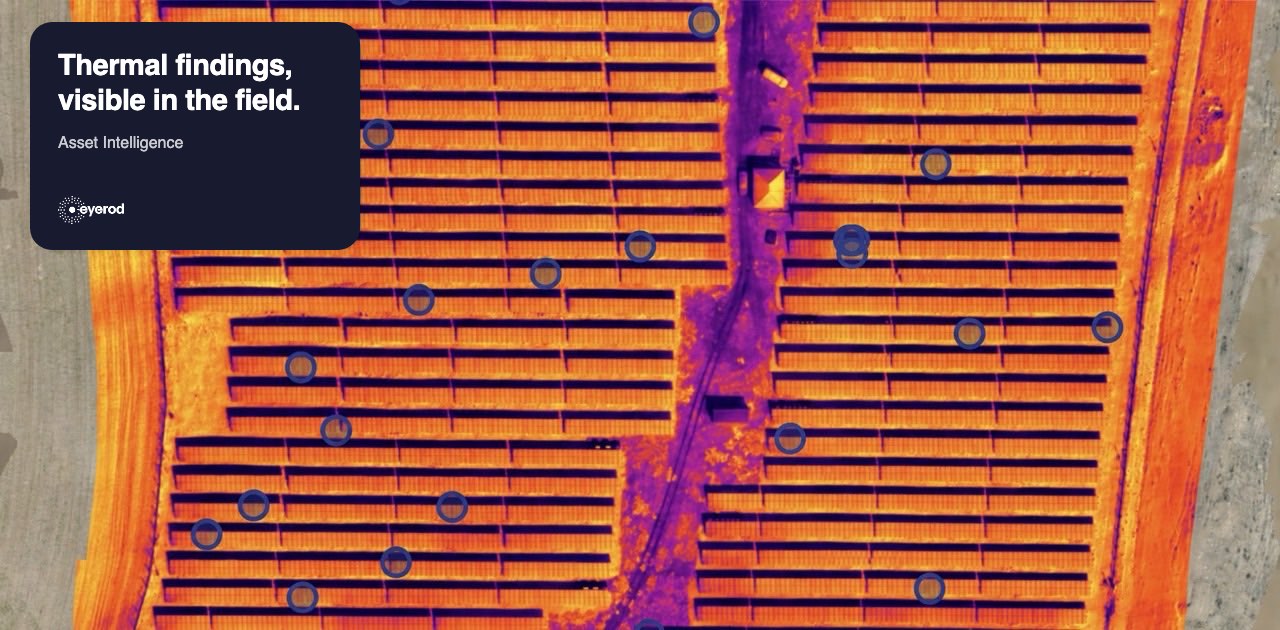
eyerod Asset Intelligence links completed thermal analysis findings to the relevant asset and location within the Thermal Analysis and Digital Twin record. Thermal analysis focuses on supported findings such as hotspot, bypass diode, PID pattern and string or module open-circuit patterns. The digital twin stores the completed result against the relevant module or site asset, allowing later surveys to be reviewed against the same record.
These are connected but separate processes: thermal analysis produces the finding; the Thermal Analysis and Digital Twin record retains it in the asset history. Learn more at eyerod Solutions.
Practical questions
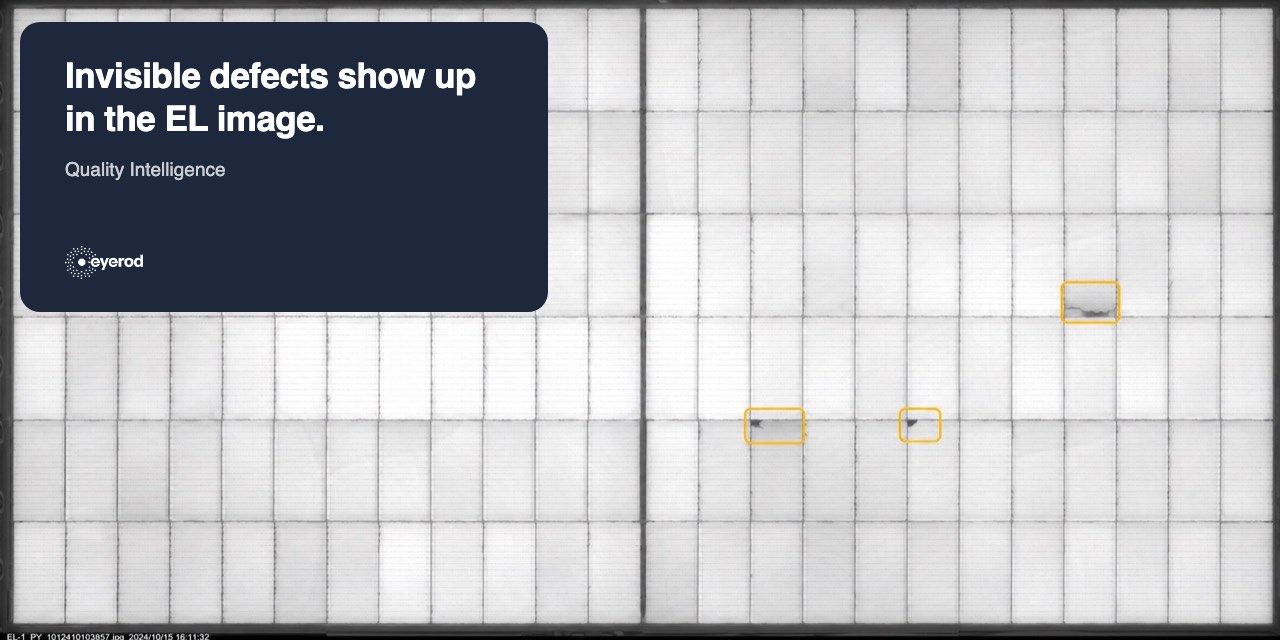
Does thermal imagery prove a fault? It is a valuable finding, but confirmation may require electrical testing, EL analysis or a physical site check.
Can SCADA locate a diode issue? Operating data may indicate a production or current difference. Additional field data is usually needed to identify the precise module-level location and type.
For collection conditions and reporting requirements, read How Drone Thermal Inspection Works.
Under which conditions these patterns produce meaningful data, and why a hotspot is not a fire diagnosis, is covered in thermal inspection and heat findings.
Why Solar Monitoring Data Isn’t Enough - What Physical Inspections Add