Which Heat Findings Does Thermal Inspection Make Visible at a Solar Plant?
Thermal Analysiseyerod · · 4 min read
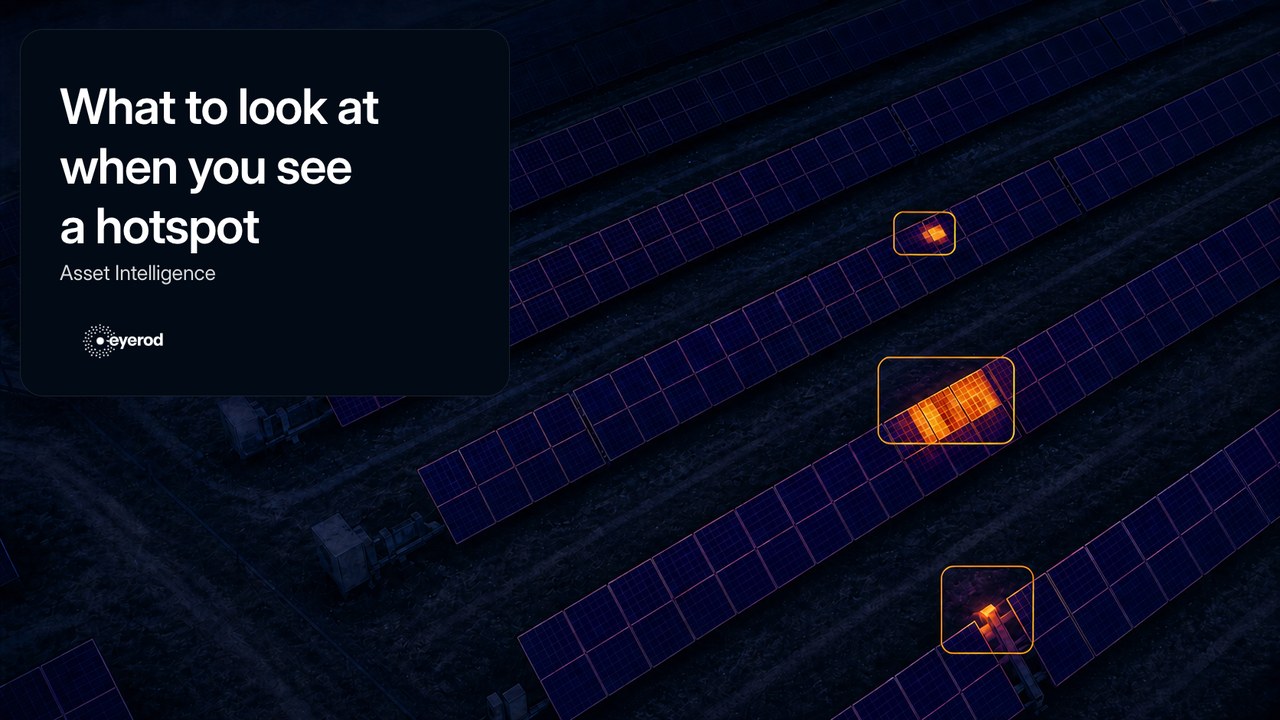
When fire risk comes up at a solar plant, thermal imaging is often expected to carry a wider role than it can. Thermal inspection does not "diagnose" a fire, and it does not "prevent" one on its own. What it can do is make certain unusual temperature patterns on modules and electrical equipment visible, pointing to the areas that warrant a closer check.
That distinction matters both for safety and for making the right maintenance decision.
Why does a heat finding matter?
A local temperature difference can be linked to current mismatch, connection resistance, shading, soiling, cell damage or other equipment-related conditions. Some patterns appear on the module; others show up at connectors, junction boxes or other components.
A thermal image does not show the root cause directly, though. The same temperature pattern can arise for different reasons, and environmental conditions and imaging geometry affect the result too. The language of the report should therefore keep the distinction between a finding, a probable class and a recommended next check, rather than asserting a "confirmed fault".
A hotspot is not a fire diagnosis
A hotspot is an area that appears hotter than its surroundings. That definition describes the thermal condition in the image; on its own it does not settle the likelihood of fire or the root cause. The physical condition behind a hotspot has to be assessed through a field check and the electrical measurements the case requires.
Drawing that line does not downplay the finding. It does the opposite: it helps teams start the right inspection at the right point without over-generalising. For the technical differences between hotspot, PID, string and diode patterns, see PV panel faults.
Under what conditions does thermal inspection produce meaningful data?
For temperature differences to be assessed reliably, the modules need to be under sufficient operating load, irradiance needs to be stable, and wind and cloud cover need to be recorded. Camera resolution, flight altitude, viewing angle and calibration also shape how interpretable the findings are.
A thermal finding should therefore never be read from the temperature colour alone. Thermal and RGB imagery, flight conditions, asset location and available operational data all belong in the same assessment.
Why do location and history improve decision quality?
On a large site, one of the most important questions is exactly where the finding is. When a finding is matched to a module, string or equipment location, the field team can define the inspection area far more precisely. Comparison with earlier scans then helps establish whether the same location keeps producing the same condition.
eyerod Asset Intelligence associates thermal analysis results with the relevant asset and location inside Thermal Analysis and Digital Twin. The aim is to turn a thermal finding into a traceable site record. eyerod does not provide fire safety auditing, electrical maintenance or root-cause confirmation services.
What does eyerod do in the thermal workflow?
eyerod analyzes drone-captured thermal and RGB imagery together, identifying unusual temperature patterns and tying them to the location of the relevant module or equipment. Findings are presented inside Thermal Analysis and Digital Twin with their image, location, class and history. The field team can then go straight to the point that needs checking on a large plant, and follow the next action through the same asset record.
eyerod’s output is not a fire diagnosis or a root-cause verdict. The platform’s job is to turn thermal data into a located, traceable technical finding; field verification, electrical testing and intervention remain the responsibility of the relevant specialist teams.
What should happen after a thermal finding?
The right next step depends on the type and significance of the finding. The team may put the location on the field-check list, review operational data and the electrical schematic, or plan the electrical test that is needed. Recording the action taken against the same asset record makes the result far easier to evaluate at the follow-up scan.
Conclusion
Thermal inspection makes certain heat findings at a solar plant visible at scale and with their location attached. It is not a fire diagnosis, nor a substitute for the full set of electrical checks. It works best when the finding is reported with its proper context and connected to an orderly decision flow that triggers the relevant technical check when one is needed.
Frequently asked questions
Does a hotspot mean there is a fire risk?
No. A hotspot is an area that appears hotter than its surroundings; that definition describes the thermal condition in the image and does not on its own settle the likelihood of fire or the root cause. The physical condition behind it has to be assessed through a field check and the electrical measurements the case requires.
Under what conditions does thermal inspection produce meaningful data?
The modules need to be under sufficient operating load, irradiance needs to be stable, and wind and cloud cover need to be recorded. Camera resolution, flight altitude, viewing angle and calibration also shape how interpretable the findings are.
What should happen after a thermal finding?
The right next step depends on the type and significance of the finding. The team may put the location on the field-check list, review operational data and the electrical schematic, or plan the electrical test that is needed. Recording the action against the same asset record makes the follow-up scan far easier to evaluate.
Solar Plant Acquisition: What Digital Asset and Thermal Records Show