Why Solar Monitoring Data Isn’t Enough - What Physical Inspections Add
Operations & Maintenanceeyerod · · 2 min read
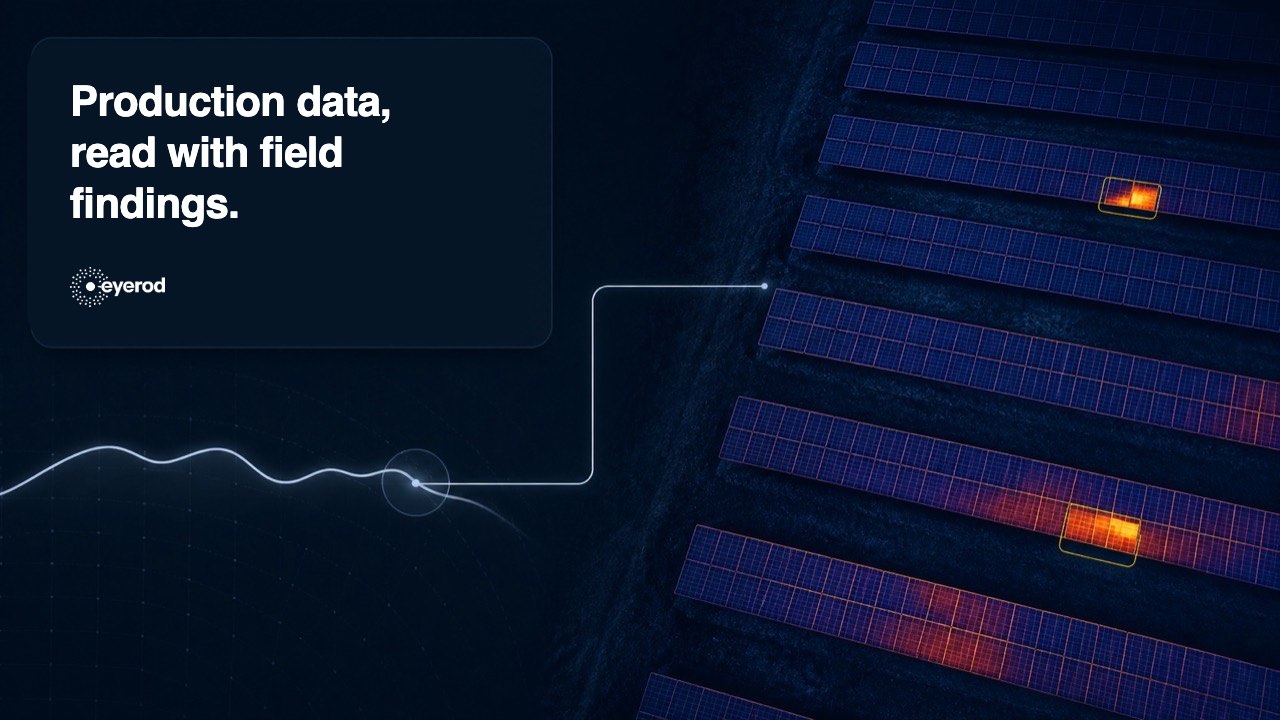
Solar monitoring systems are central to daily plant operations. They record inverter output, string currents, meteorological data, meters and communications status over time. This information helps teams identify changes in performance and operational events. Physical inspection answers a different question: which asset, at which location, has a visible or thermal finding on site?
The two approaches are complementary. Monitoring data can indicate a change; thermal, RGB or EL image analysis can add physical context. The goal is not to replace operating data but to use each source for the question it can answer well.
Different levels of visibility
Monitoring infrastructure is strong at continuous time-series data. It may reveal an inverter outage, a current difference, a communications issue or a change in performance ratio. Its measurement resolution, however, is not always the same as the physical resolution of the site. Data is often collected at inverter, combiner or string level, while a physical finding may exist at one module or one connection.
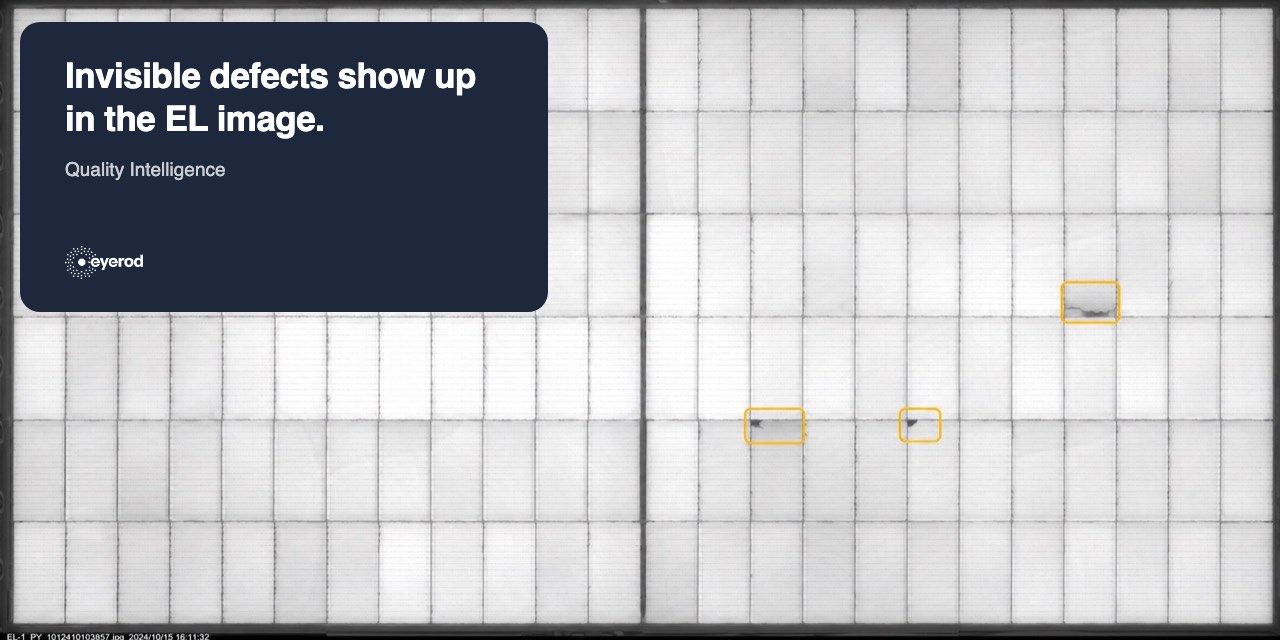
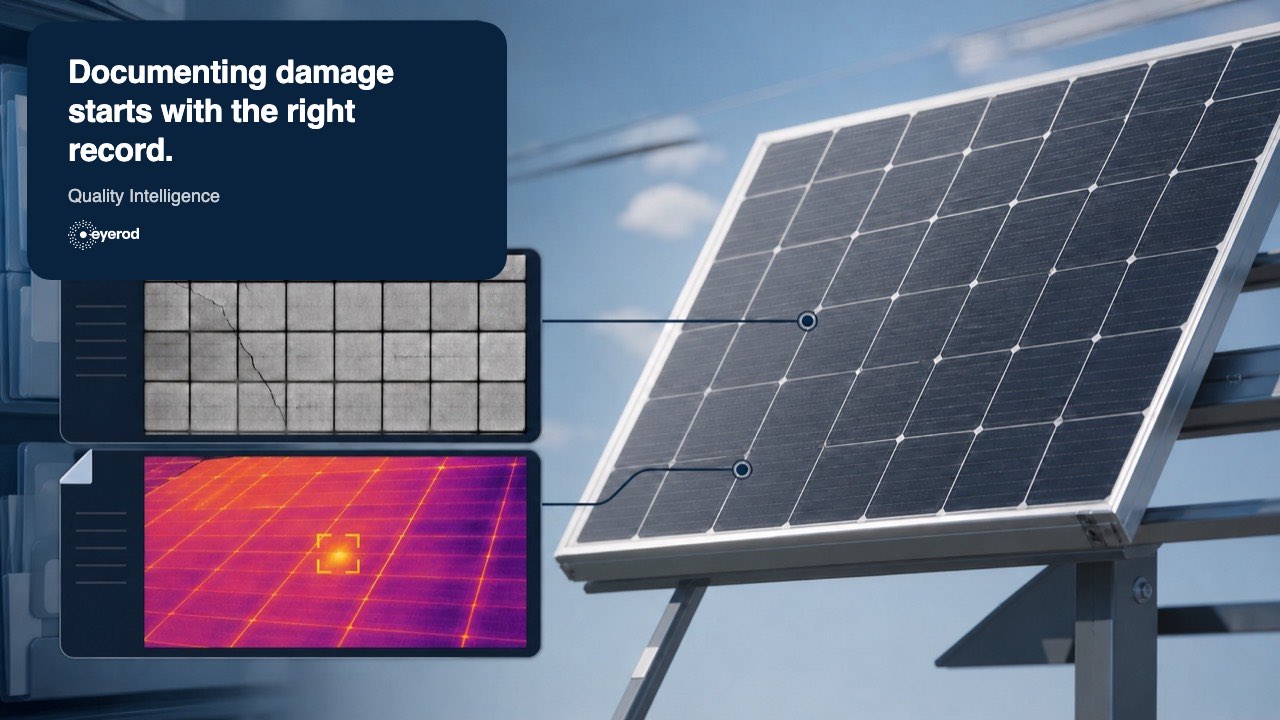
Drone thermal and RGB data provide a location-based view across a large area. Thermal imagery may reveal patterns compatible with hotspot, bypass diode behaviour, PID or open-circuit conditions. RGB imagery helps teams review physical context such as soiling, shading or visible damage. EL image analysis is a separate data source for cell-level defects that may not be apparent in operating data.
A combined workflow
A practical maintenance workflow starts with a monitoring event or a periodic inspection plan. If field imagery is collected, the finding is linked to the relevant module, string, inverter or area. The maintenance team then has a defined location and a suitable next check. Cleaning, repair or replacement can be recorded against the same asset, and later data collection can revisit that record.
eyerod Asset Intelligence
eyerod Asset Intelligence links completed thermal analysis findings to assets and locations in the Thermal Analysis and Digital Twin record. It does not replace a plant’s monitoring system. It adds a structured physical record that can support maintenance decisions alongside operating data. When the same asset is reviewed in later surveys, its record can be assessed over time within the project-management platform.
Learn more about the approach at eyerod Solutions. For data-collection conditions, see How Drone Thermal Inspection Works.
Practical questions
Can monitoring systems detect microcracks? Module-level defects without a clear production difference may not be distinguishable in operating data. EL analysis provides different evidence.
Does thermal analysis see every issue? No. Issues without a usable thermal contrast may require other tests.
What happens after a finding? It is located, assigned to the appropriate field or electrical check, and retained with the follow-up action.
Microcracks in Solar Panels: Causes and Detection