Solar Panel Warranty Claims: How to Document Defects for the Manufacturer
Quality Controleyerod · · 2 min read
A solar panel warranty claim is not only about knowing the warranty term. The assessment depends on the manufacturer’s conditions, the timing of notification, installation history and the technical records supplied with the claim. When a defect or performance concern is found, the first step is to create a structured record linked to the affected module.
This article addresses technical documentation, not legal advice. Each manufacturer’s current warranty terms, notification periods and evidence requirements should be checked for the specific module and market.
Product and performance warranties
A product warranty addresses defined material and workmanship conditions. A performance warranty may state a minimum expected output at set points in time. These are separate commitments, often with different exclusions and assessment methods. Physical breakage, unreadable serial numbers, incorrect transport, unauthorised intervention or installation outside the manufacturer’s instructions may affect the evaluation.
Building a technical claim file
A useful file includes the affected module’s serial number, model and quantity; project and location details; delivery and installation records; dated photographs; available EL image analysis, thermal reports, I-V measurements and site notes; and the history of any intervention. These materials do not independently prove a cause. They provide the technical context required for a manufacturer or independent laboratory to review the case.
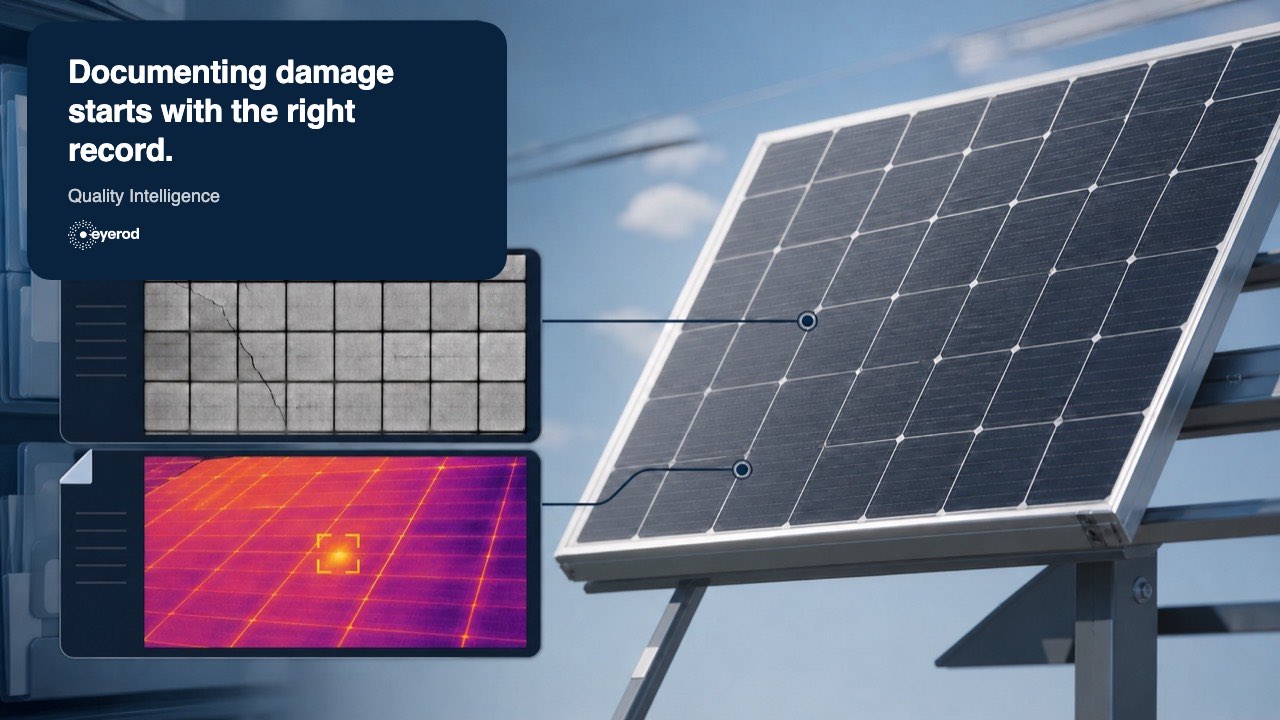
EL analysis can record patterns associated with cell cracks, broken cells, connections or inactive areas. Thermal reporting can document operating-condition temperature findings, their location and the conditions under which they were observed. Both should keep observation and conclusion separate. A recorded crack-like pattern is an observation; its cause requires the wider evidence set.
eyerod Quality Intelligence
eyerod Quality Intelligence analyses factory-captured EL images with AI and produces module-level quality records. eyerod does not capture EL images or perform EL testing. When the analysis output is linked to module identity and project documentation, it can provide a more orderly technical reference for acceptance and later supplier discussions.
For operating-stage findings, eyerod Asset Intelligence can link completed thermal analysis outputs to the relevant asset and location in the Thermal Analysis and Digital Twin record. These quality and operating records remain separate processes while being retained in the same project-management environment. Explore eyerod Solutions.
Practical questions
Is an EL report mandatory? Evidence requirements vary by manufacturer. EL analysis can provide useful technical documentation for some cell-level defects.
What should be done before module replacement? Record the serial number, location, photographs and any available test data, then review the manufacturer procedure.
Who is responsible for transport damage? It depends on delivery terms, the transport agreement, insurance and the warranty terms.
For more on EL image analysis, read Microcracks in Solar Panels.
How to Track Solar Construction Progress with Drones