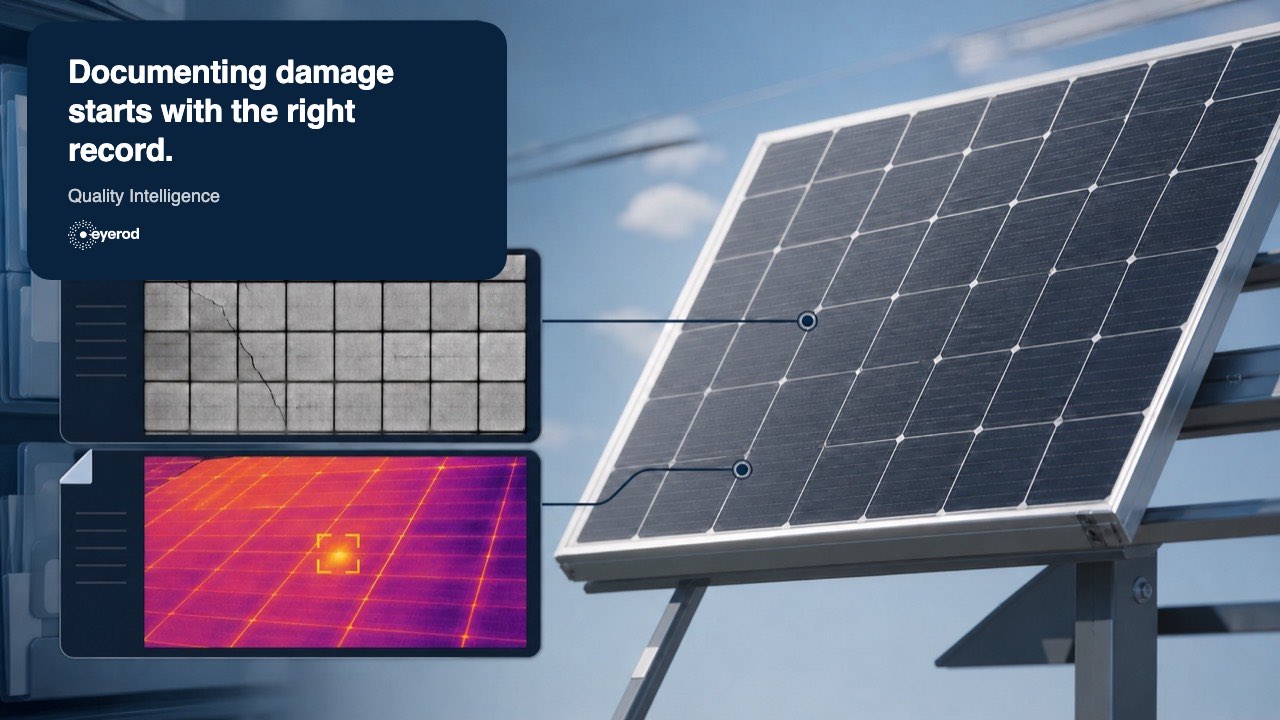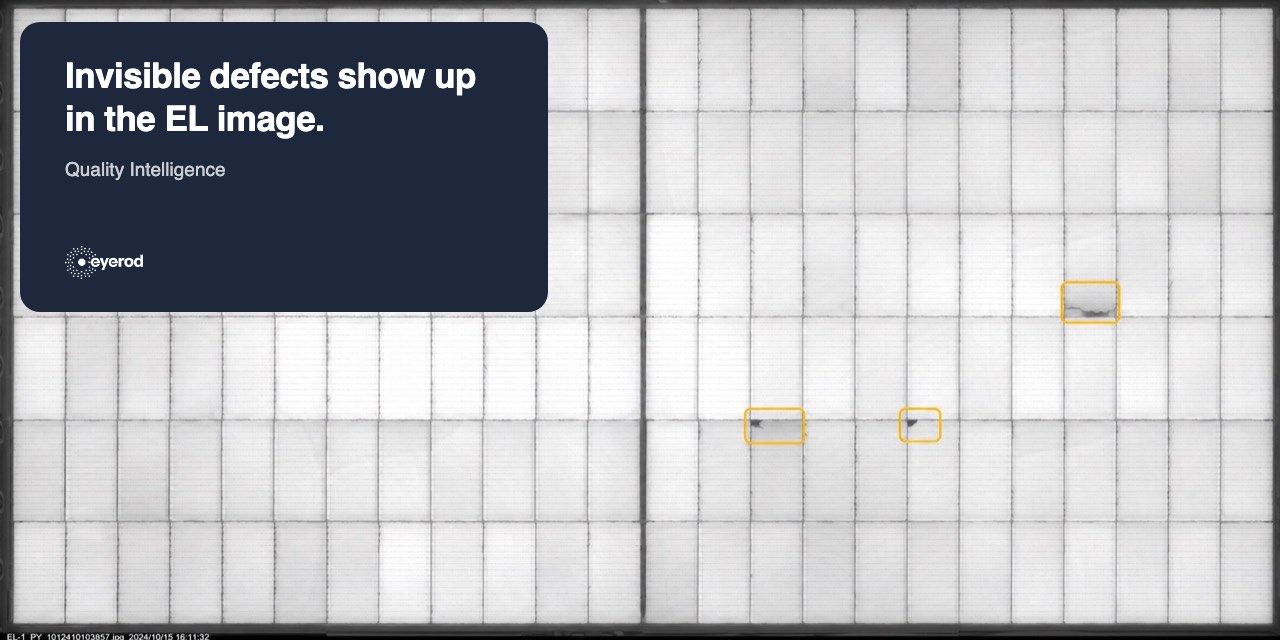
Microcracks are fractures in crystalline silicon cells that are often not visible from the front of a finished solar module. The cells sit between the front glass and protective rear layers, so a module can look intact while a cell-level defect is present. For that reason, microcrack assessment should go beyond the question of whether a crack exists. Its location, the electrically affected area and the module design all matter.
When can microcracks occur?
Cells can be exposed to mechanical stress during manufacturing, module assembly, packing, transport, unloading, on-site handling and installation. Incorrect stacking, package impacts, forklift handling, unsuitable transportation and excessive load on a module during installation can all create risk. Snow, wind and temperature changes may also influence an existing defect in the field.
Seeing a crack does not, by itself, prove when it occurred. A responsible technical assessment needs delivery records, module identifiers, dated images and relevant project documentation. These records provide context for discussions among the supplier, EPC contractor and asset owner.
Why electroluminescence matters
Electroluminescence, or EL imaging, is one method used to make electrical behaviour inside cells visible. EL images can reveal patterns associated with cracks, inactive areas, broken cells or connection issues. Visual inspection, thermal imagery and I-V measurements each provide different information; none is a direct substitute for EL analysis.
An EL image should not be treated as an automatic rejection decision. Image quality, module type, capture conditions and the applicable acceptance criteria must be recorded. The presence of a visible crack does not automatically define the electrical impact. Where required, electrical measurements and manufacturer guidance should be used alongside the image review.
eyerod Quality Intelligence
eyerod Quality Intelligence analyses factory-captured raw EL images with AI, classifying visible defects at module level and producing a structured output for quality decisions. eyerod does not capture EL images or perform EL testing. Its role is to analyse the available image set and support a more consistent review of cell cracks, broken cells, soldering and connection-related patterns.
When image files are linked to module identifiers, dates and project records, they can provide a clearer technical reference for acceptance and supplier discussions. Explore Quality Intelligence at eyerod Solutions.
Practical questions
Does every EL defect mean rejection? No. The project specification and manufacturer criteria determine the decision.
Can a cracked cell be repaired on site? There is no standard field repair for a cell-level crack. The appropriate action depends on the defect, technical impact and warranty conditions.
Why retain pre-installation records? They can document the condition represented in the available EL image set before later project stages. Read Solar Panel Warranty Claims for the documentation workflow.
Solar Panel Warranty Claims: How to Document Defects for the Manufacturer